
How Scopus with AI has become an essential tool for acquisition editors
While journal articles build incremental knowledge, books help establish stability for a growing area of research and disseminate it to a broader audience.
While researchers and librarians are leveraging the power of Scopus with AI to quickly build research topic insights, identify possible collaborators, and reveal potential areas for exploration, it is increasingly recognized as an important tool for those on the publishing side. We recently spoke with three Acquisitions Editors (AEs) at Elsevier — Simi Harrison, Maria Elekidou and Rakhshan Rizwan — who describe how Scopus with AI has transformed their work process.
Ask an acquisition editor about their biggest challenge and they’ll often say, “finding authors.” Their job, commissioning books, is distinct from the role of journal editors, who typically receive article submissions daily.
While journal articles build incremental knowledge, books help establish stability for a growing area of research and disseminate it to a broader audience. For AEs, this process starts with “prospecting,” identifying a growing topic from within a broader field, finding expert researchers in the topic, and then inviting those researchers to author a book, all without being subject matter experts in the field themselves.
Identifying growing research fields
Maria Elekidou covers the fields of hydrological modeling, wetlands, and marine microplastics. She notes that the initial challenge is wading through a vast landscape of research literature to find topics that resonate. “While some of my outreach is to people in areas I already know, there are 65 to 70 topics that have my attention.”
AI features in Scopus make a big difference here. “It has cut down a lot of time spent spinning my gears at the start of a process,” notes Simi Harrison, whose portfolio includes the animal sciences and marine biology. “It’s sort of this catch-22. How do I search if I don’t know about a topic?”
Before Scopus with AI, this involved a lot of trial and error. “A huge benefit of Scopus with AI is that I can enter an unrefined topic like ‘sea turtle conservation,’ and Copilot opens in new tab/windowwill put together the search string for me,” explains Simi. She likes the transparency of the Copilot summary, where she can view the detailed search string and refine if necessary.
“What I found very useful in Scopus with AI is you can pose a simple question, and it gives you more than a summary — it’s more thorough,” adds Maria. If she is exploring a field she knows, she skips the initial summary to view the Summary table, which lists important subtopics, and she can easily navigate to referenced abstracts for further evaluation.
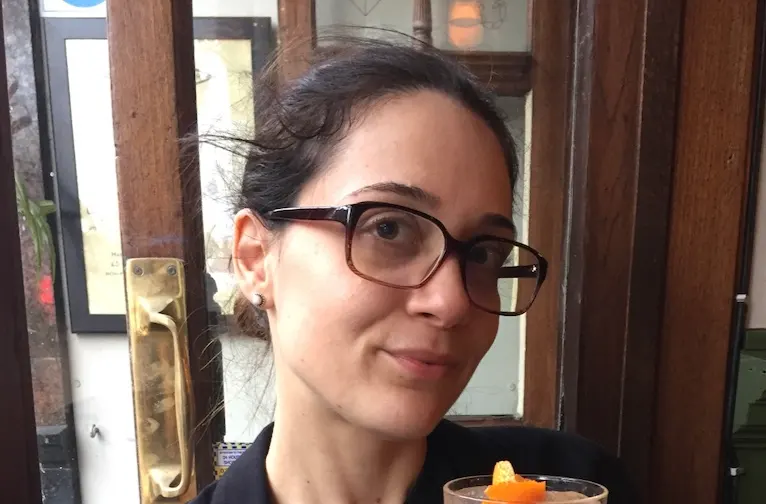
Maria Elekidou, Acquisitions Editor, Elsevier
What I found very useful in Scopus [with] AI is you can pose a simple question, and it gives you more than a summary—it’s more thorough.
Rakhshan Rizwan works on environmental sciences topics in the foundational content team, which develops textbooks for university courses. She uses Go deeper questions to gain subject knowledge and identify subtopics that could differentiate a new textbook from others in a field. “It helps me figure out the key topics in an area and develop a working understanding of what the field is about,” she says.
She notes that before Scopus with AI, the AEs might have needed days or weeks to refine their queries. Now it’s a matter of hours or days, which frees up time to connect with experts and vet a project’s potential.

Simi Harrison, Acquisitions Editor, Elsevier
Now I’m better able to identify researchers who can talk to me about exactly what I’m looking for.
Maria relies on Topic experts when developing her outreach plan. This feature displays short profiles of top researchers in the query’s fields based on their h-index, a measure of research impact.
Once they’ve identified an expert, Expanded summary helps the AEs have more successful outreach conversations. Rakhshan explains, “I can use the output from the Expanded summary and create a workable email draft.” She adds, “Since I began using Scopus [with] AI, I’ve had more responses from cold outreach to researchers because of the additional information I can include.”

Rakhshan Rizwan, Senior Acquisition Editor, Elsevier
Since I began using Scopus [with] AI, I’ve had more responses from cold outreach to researchers because of the additional information I can include.
Their preparation pays off even if the expert’s response veers from the initial plan. According to Simi, “I’ve had conversations where they’ve said, ‘We don’t actually need a book on this topic, but I also conduct research in this other area.’ Scopus [with] AI gives me enough knowledge on a topic that I’m able to continue the conversation when they say, ‘Well, what about this topic?’”
Setting up authors for success
A first-time author might feel overwhelmed when envisioning a new book for their field. Scopus with AI also helps the AEs support authors as they draft the book proposal, which is reviewed by internal experts before a publishing agreement is signed. Rakhshan found sharing the Concept Map with textbook authors valuable because it groups an area’s subtopics visually into branches that could stand in for chapters. “Authors have said it’s helpful,” she explains. “It may not be their final structure, but it helps them organize and relieves some initial hurdles.”
Scopus with AI - an essential tool for Acquisition Editors
For all three Acquisition Editors, the reliability of Scopus with AI’s model and its integration with Scopus gives them confidence, whether they’re exploring new topics or contacting experts. Simi says, “It’s reassuring to know that it’s only drawing from peer reviewed scientific articles, and there is no concern about hallucinating,” which is often a problem with general-purpose GenAI models.
A workshop presented by Simi to her colleagues earlier this year has strengthened their collective skills in using Scopus with AI. It is quickly becoming an essential tool that helps these AEs better support timely publications aligned with current research trends, helping to enrich the field of scientific knowledge for everyone.