Unfortunately we don't fully support your browser. If you have the option to, please upgrade to a newer version or use Mozilla Firefox, Microsoft Edge, Google Chrome, or Safari 14 or newer. If you are unable to, and need support, please send us your feedback.
Support and assess clinical reasoning with Clinical Cases
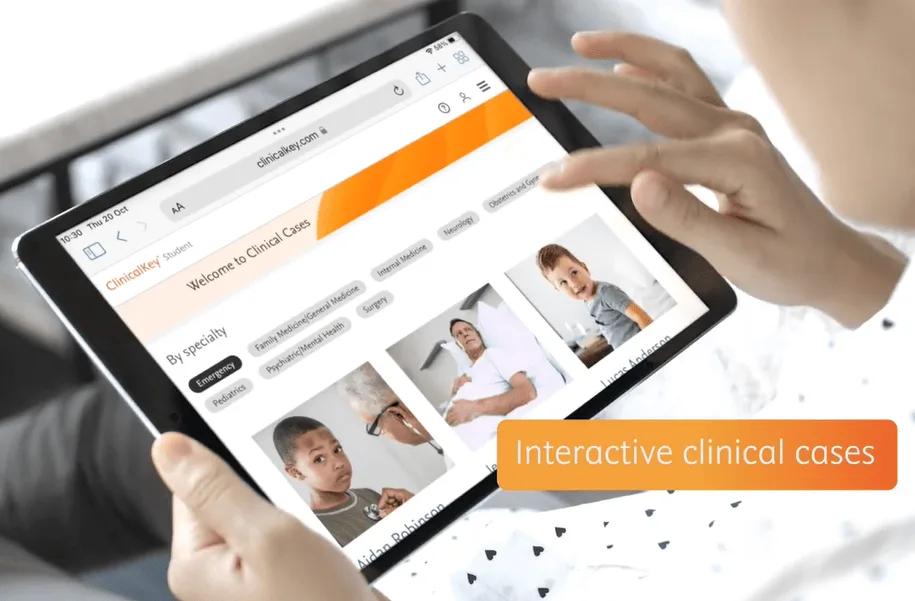
Enhance learning with short, interactive virtual cases that simulate authentic patient scenarios to help students develop sound clinical reasoning skills.
Help students transition from the classroom to clinical practice with clinical cases uniquely designed to offer valuable experience managing diverse conditions and scenarios.
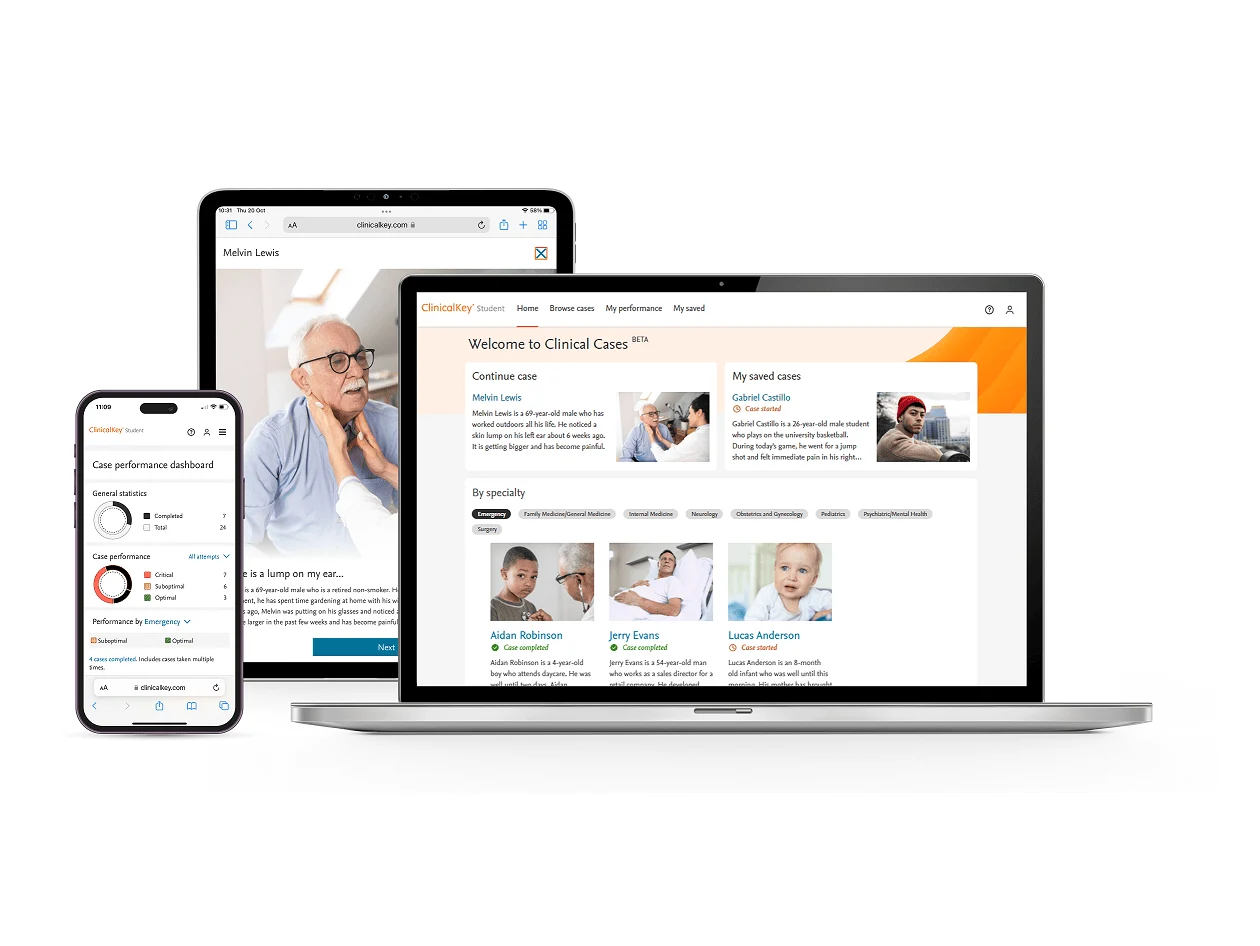
Clinical cases enable students to explore a wide range of conditions, all based on real-life clinical data.
Conversational interface helps students practice engaging with patients to inform decision-making.
Virtual consultant supports students with essential guidance and insights.
A risk-free space for learning
Empower students to explore clinical decision-making in a controlled environment that offers:
A safe space where they can learn from mistakes without risking patient safety.
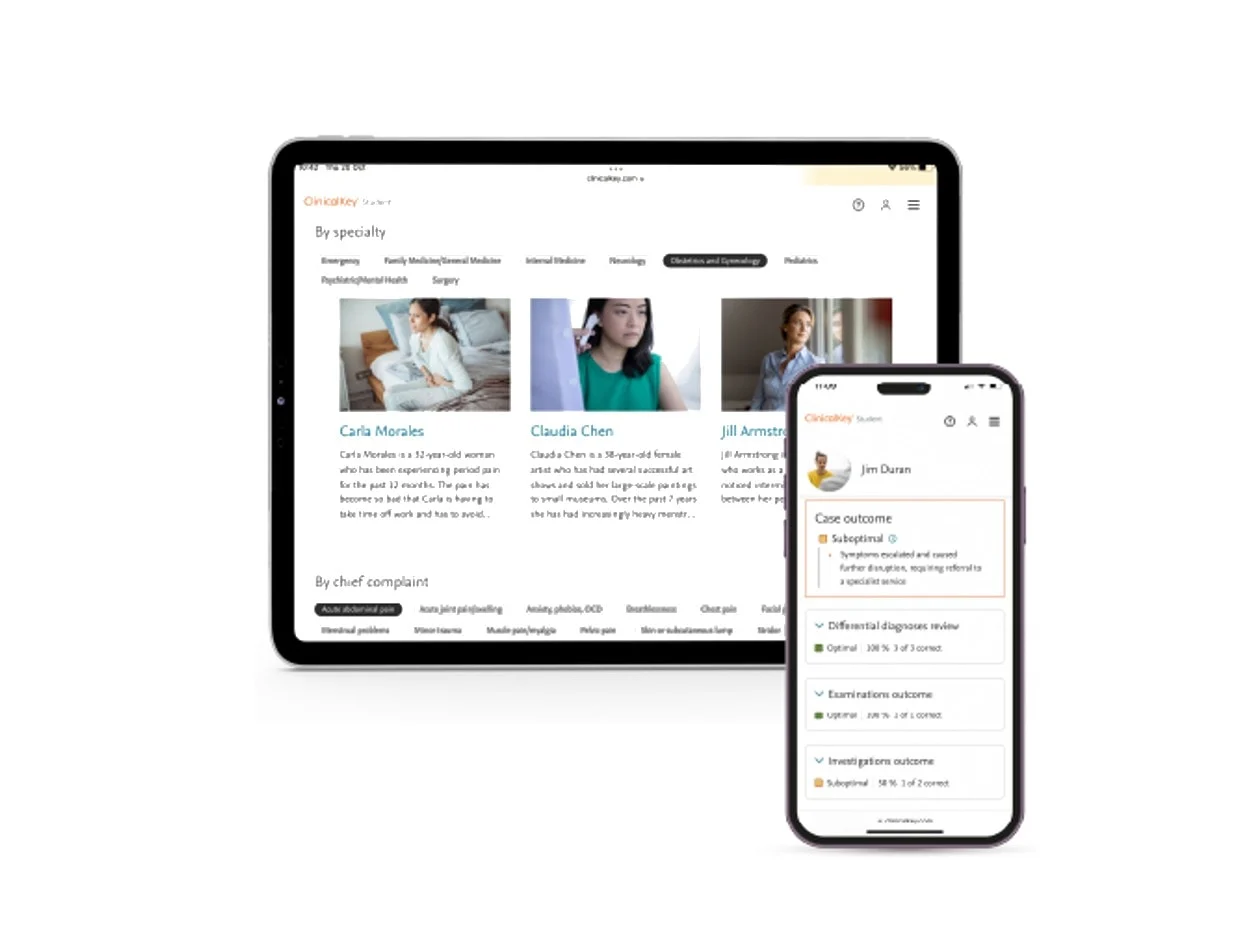
Real-time feedback and critical alerts that ensure each decision becomes a learning opportunity.
Instant performance results that measure progress and help identify areas needing improvement.
Trusted content, vetted by experts
Standardized cases created and reviewed by healthcare experts help save valuable faculty time with:
Evidence-based and clinically relevant content
Pre-designed cases ready for immediate use
A reliable teaching supplement for clinical reasoning
I loved the variety of cases. I was able to select something that directly overlapped with our classroom curriculum, then apply what I'd learned in a more practical setting that went beyond OSCE.
Medical Student
Frequently asked questions
Elsevier Clinical Cases is an interactive virtual patient simulation platform designed to help medical students develop clinical reasoning skills through short, scenario-based cases grounded in real-life clinical data. Students navigate authentic patient encounters using a conversational interface, receive real-time feedback and critical alerts with each decision, and view instant performance results — all in a risk-free environment where they can learn from mistakes without any impact on patient safety.
Clinical Cases is specifically designed to ease the transition from pre-clinical study to clinical environments by exposing students to a wide range of conditions and patient scenarios before they encounter them in practice. A virtual consultant provides essential guidance throughout each case, and the platform's conversational interface helps students practice the interpersonal communication skills needed to gather information and inform clinical decisions — skills that go beyond what written exams or OSCEs typically assess.
Clinical Cases reduces the faculty time burden associated with teaching clinical reasoning by providing pre-designed, evidence-based cases that are ready for immediate use — created and reviewed by healthcare experts and aligned with classroom curricula. Faculty can select cases that directly overlap with current course content, assign them as practical supplements to lectures, and rely on the platform's built-in assessment and feedback mechanisms rather than designing their own case scenarios from scratch.
All cases in Elsevier Clinical Cases are developed from real-life clinical data and reviewed by healthcare experts to ensure they reflect current, evidence-based practice. This expert-vetting process maintains clinical accuracy across the case library, giving both students and faculty confidence that the scenarios students encounter represent the kinds of decisions they will actually need to make in practice — not hypothetical or outdated presentations.
Clinical Cases provides real-time feedback and critical alerts at each decision point, turning every student choice into a teachable moment. After completing a case, students receive instant performance results that measure their clinical reasoning and identify specific areas needing improvement — enabling targeted remediation rather than generalized review. This continuous feedback loop supports self-directed learning and helps students build diagnostic confidence progressively over time.
Help students develop the confidence and clinical reasoning skills they need to provide safe, effective patient care